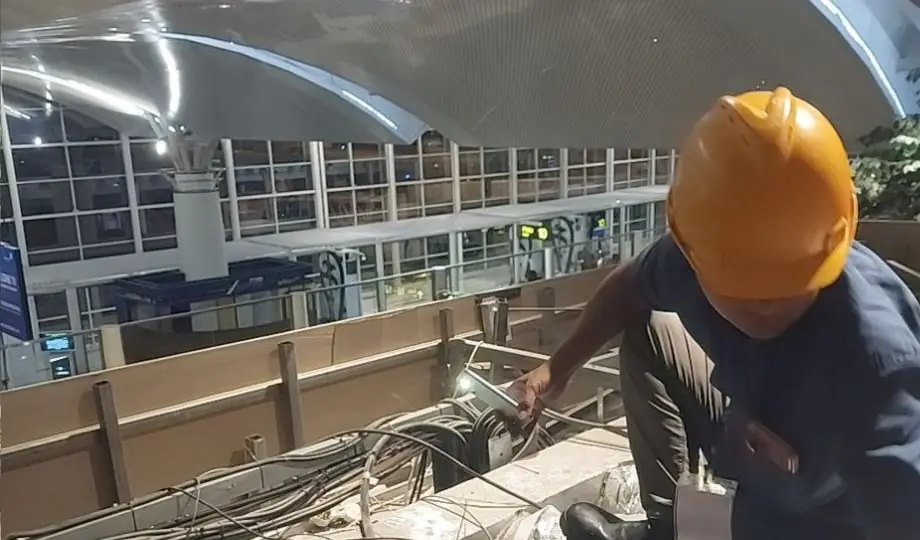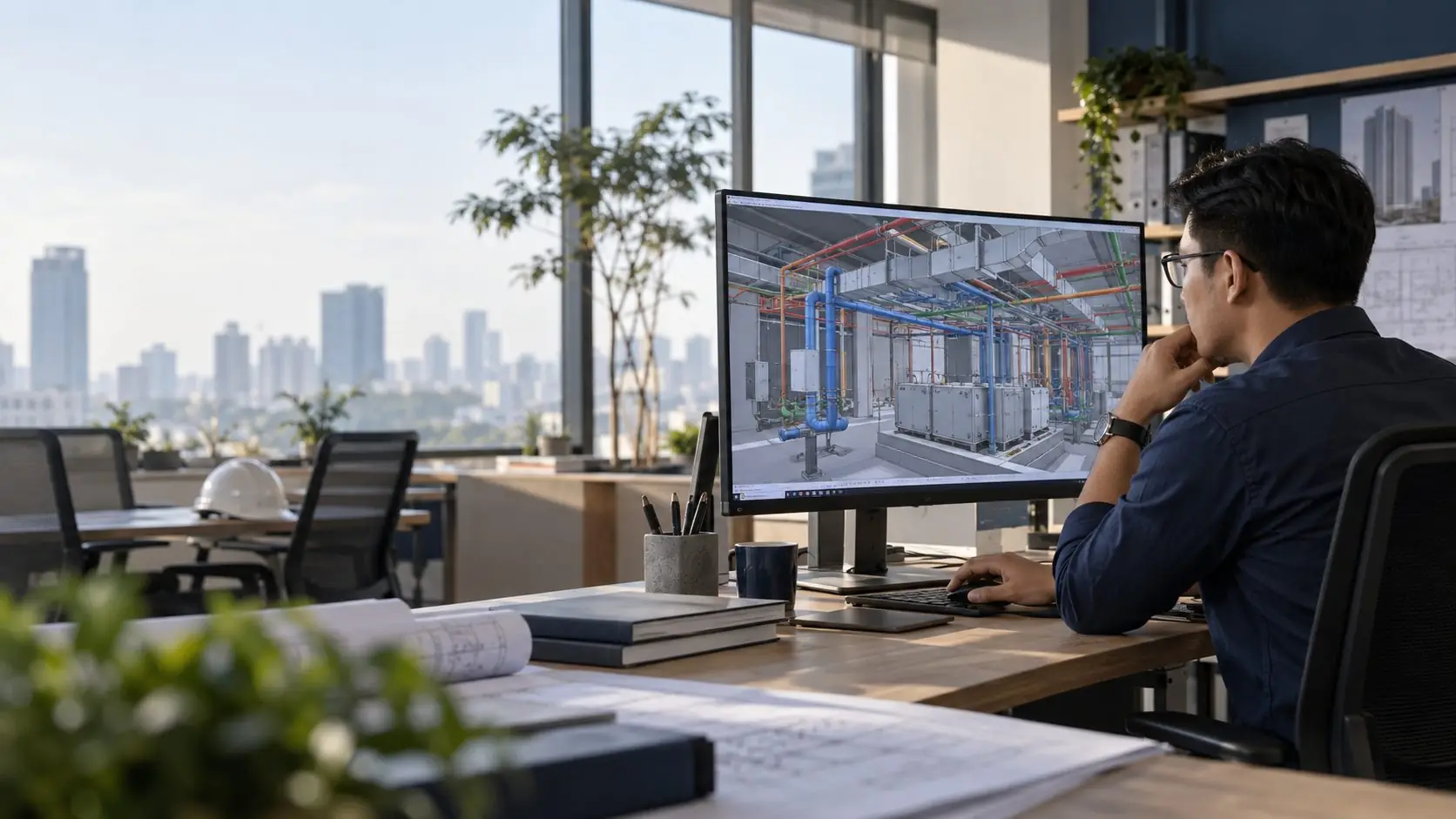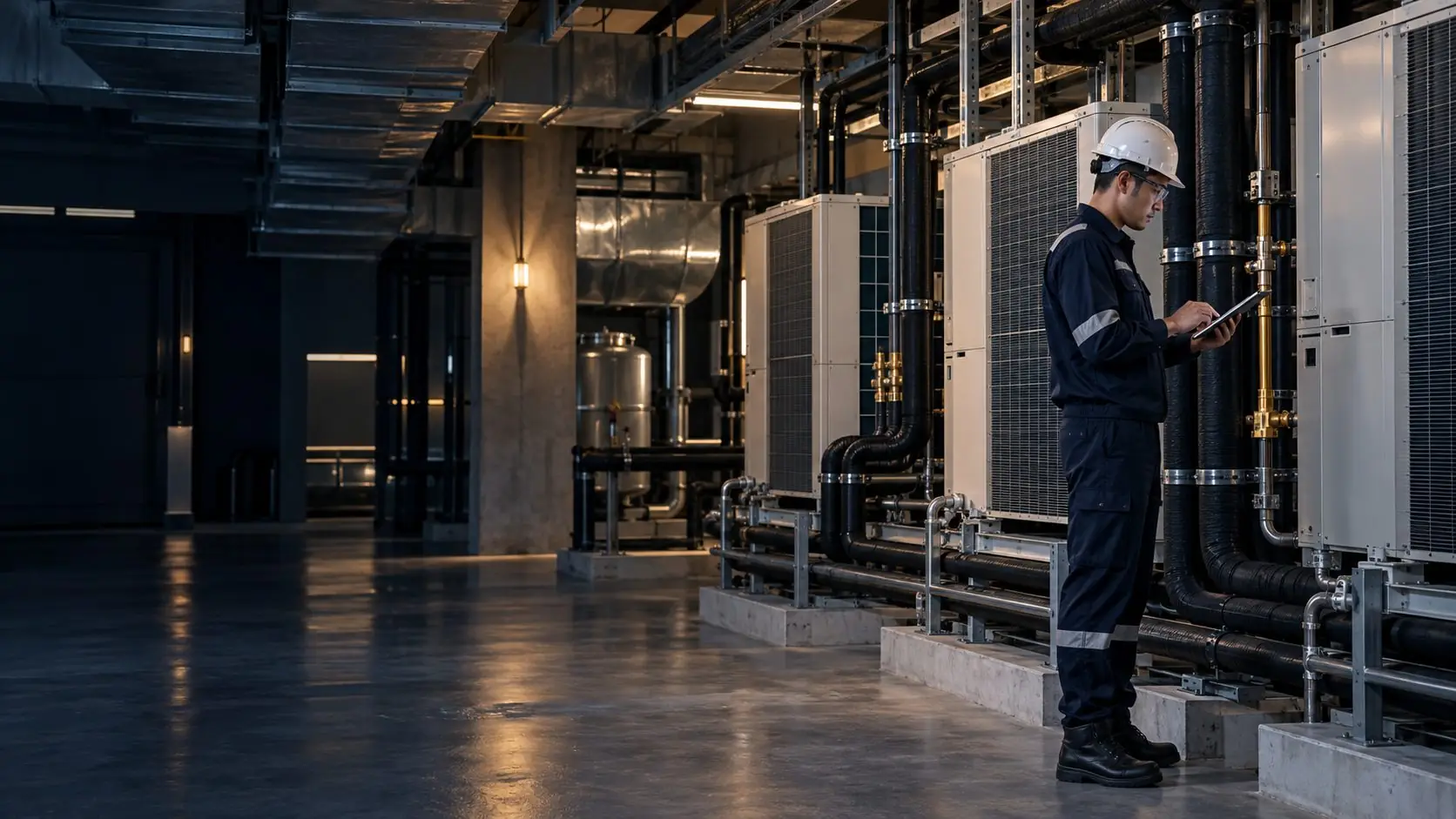
The cold room at a factory in Namorambe, Deli Serdang, had stopped reaching its target temperature. The SOKANTARA team came in for scheduled service and started tracing the cause at the evaporator inside the cold room.
This article is for managers of factories, warehouses and production kitchens that run cold rooms. It covers the common reasons a cold room misses its temperature, the order of checks during service, and an outline of the job in Namorambe. We don't name the factory.
The short answer: a missed temperature almost always traces back to one of five areas, namely the evaporator, defrost, refrigerant, condensing unit, or the load and air entering the room. Working through them in order avoids replacing parts that aren't faulty.
Why does a cold room fail to reach its target temperature?
Because more heat is entering the room than the system can remove. The cause can be on the refrigeration side, or in the room and the way it is used.
Danfoss's cold room troubleshooting guide puts door sealing, airflow, evaporator condition, controller setpoint and sensor position, refrigerant charge and cooling capacity among the first checks. That order makes sense, because the easiest parts to check are often the cause.
| Symptom | Likely cause |
|---|---|
| Evaporator coil covered in thick ice | Defrost not working, frozen defrost drain, door opened too often |
| Evaporator fan stopped or turning weakly | Failed fan motor, wiring or connector fault, fan blocked by ice |
| Temperature falls slowly although the unit runs constantly | Low refrigerant, expansion valve fault, dirty condenser |
| Condensing unit trips often | Dirty condenser, poor ventilation around the unit, unstable supply voltage |
| Temperature rises after loading | Door left open, damaged door gasket, product loaded warm |
| One side of the room is warmer | Racks or stacked product blocking airflow from the evaporator |
What temperature should a cold room hold?
It depends on what is stored. Frozen food stores are generally held at -18°C or colder, following the Codex code of practice for quick frozen foods.
Chiller rooms for fresh goods are kept above freezing, with a setpoint that suits the product. Many factories use both: a chiller room as a work area or anteroom, with a freezer room behind it. The setpoint and its tolerance should be written down, so technicians have a reference during service.
In what order should a cold room be checked during service?
Start with what you can see inside the room, then move out to the refrigeration system. The order we use:
- Record the starting conditions: actual temperature, controller setpoint, sensor position, and when the room started missing its temperature.
- Check the evaporator: ice thickness on the coil, fin cleanliness, and whether every fan turns. A three-fan evaporator with one fan stopped has already lost part of its airflow.
- Check the defrost system: defrost heaters, defrost interval and duration in the controller, and the defrost drain line and its heater.
- Measure the refrigerant side: suction and discharge pressures, superheat, and signs of leaks at pipe joints. Work to the manufacturer's manual and refrigerant safety rules.
- Check the condensing unit: condenser coil cleanliness, fan operation, clearance around the unit, and supply voltage.
- Check the room and how it is used: door gaskets and hinges, strip curtains if fitted, loading habits, and how racks are arranged in front of the evaporator.
Record the result of each step. Scheduled service records show a drop in performance early, before the temperature drifts off target.
What did the job in Namorambe look like?
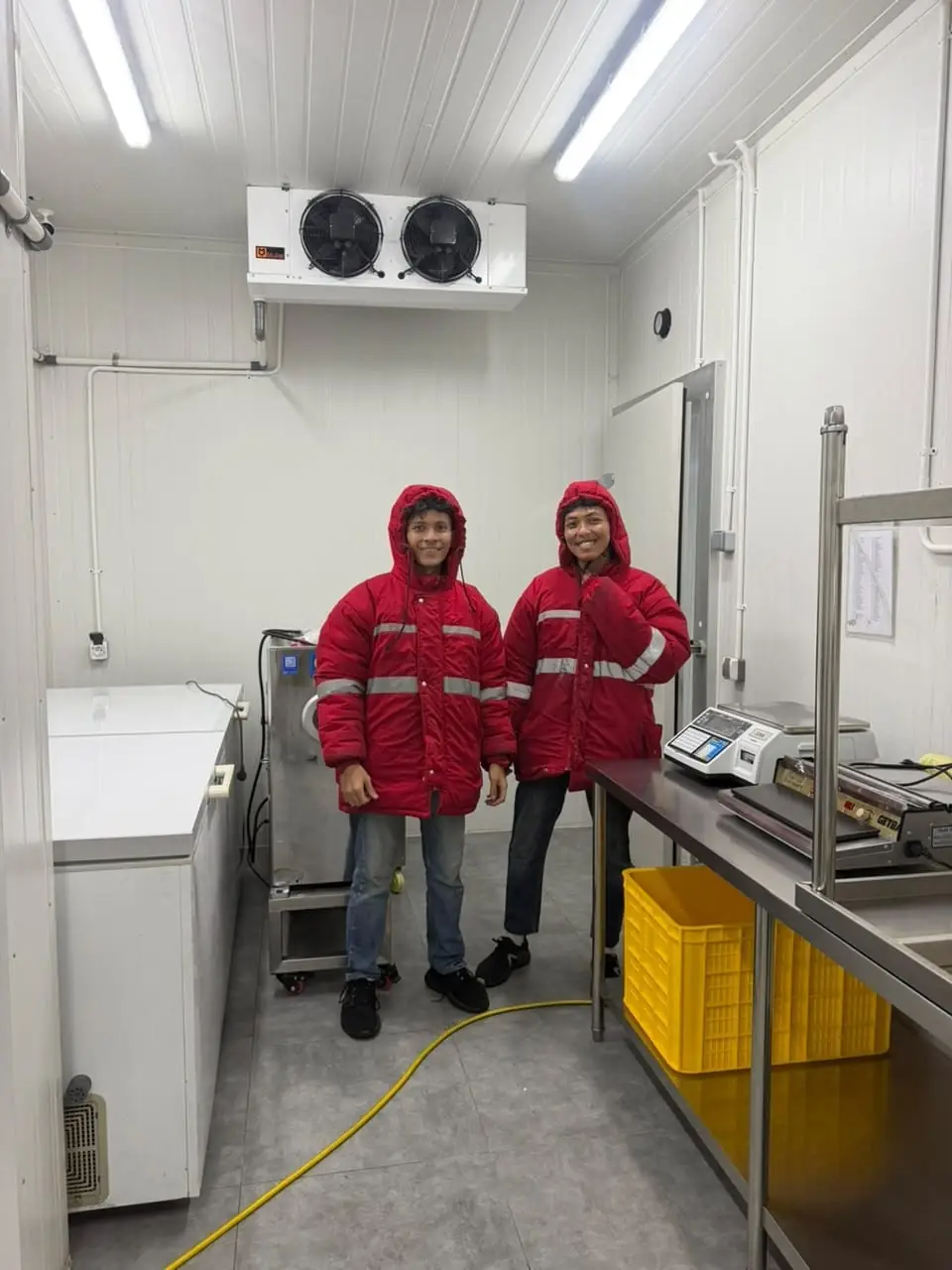
The factory's cold room has a work area with a two-fan evaporator and a freezer room behind it with a three-fan evaporator on the ceiling. The complaint was that the room wasn't reaching its target temperature.
The team handled it as part of scheduled service. The technicians worked in cold-weather jackets inside the room and checked the evaporator from a ladder between the storage racks. You can watch the cold room evaporator service video, and the photos are on our projects page.
Service inside a freezer room needs planning. A door left open during the work adds load, so the room should stay closed as much as possible and product should be moved or protected first.
How often does a cold room need service?
The schedule follows the unit manufacturer's manual and how hard the room is used. A cold room whose door opens often, or one in a dusty area, needs its evaporator, door gaskets and condenser checked more often.
Good scheduled service covers cleaning the evaporator and condenser coils, checking fans and defrost, measuring pressures and logging temperatures. For factories in industrial areas such as Namorambe and Tanjung Morawa, a written schedule helps avoid production disruption.
Conclusion
A cold room that won't reach its target temperature should be checked in order: evaporator, defrost, refrigerant, condensing unit, then the door and how the room is used. Many causes can be found before a major component fails.
SOKANTARA is an HVAC and MEP contractor headquartered in Medan and working across Indonesia, including factory areas in Deli Serdang. We handle HVAC and refrigeration, including scheduled cold room service. Contact our team if your cold room temperature is becoming unstable.
References
Sources referred to in this article:
Frequently asked questions
Why is the cold room evaporator covered in thick ice?
Usually because the defrost cycle isn't completing, for example a failed defrost heater, controller settings that don't suit the room, or a defrost drain line that is blocked and frozen. A door that is opened often also adds moisture that turns to ice on the coil.
What temperature should a cold room run at?
It depends on the product. Frozen food stores are generally held at -18°C or colder, following the Codex code of practice for quick frozen foods, while chiller rooms are kept above freezing to suit the product. The exact setpoint comes from the product owner and the unit specification.
Does a cold room that won't cool always mean a refrigerant leak?
A cold room that won't cool does not always mean a refrigerant leak. An iced evaporator, a stopped fan or a dirty condenser produce similar symptoms. Adding refrigerant without measuring pressures and finding the leak only delays the problem.